Sleep and Jiu-Jitsu: The Hidden Key to Performance
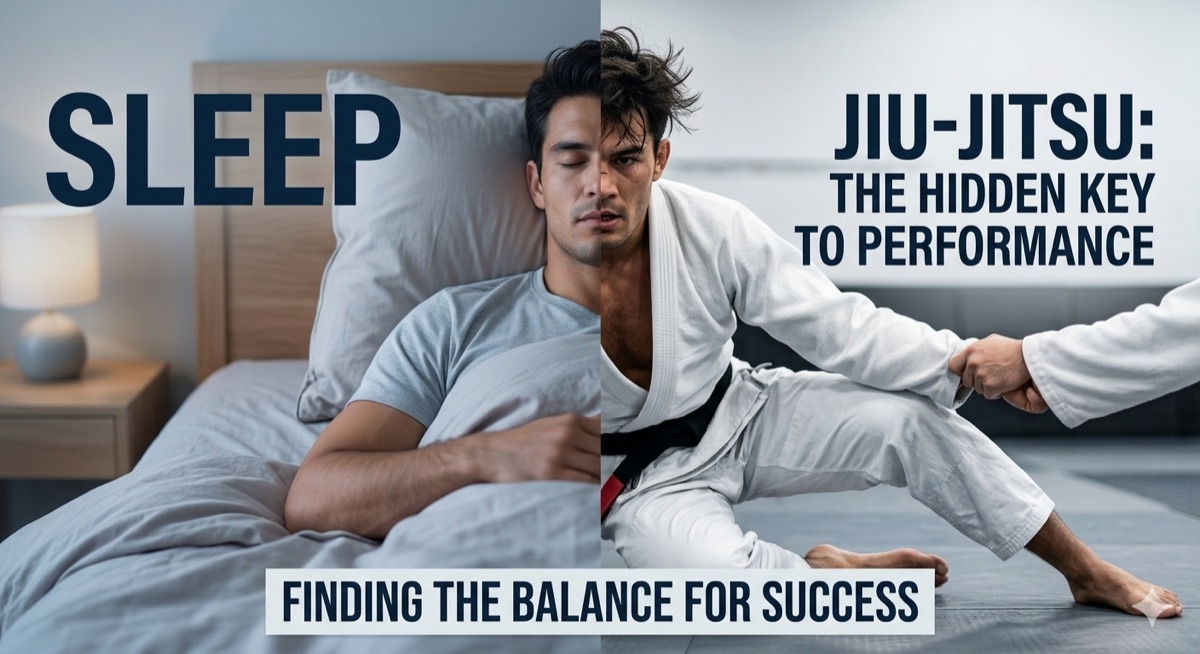
Most people who train Brazilian Jiu-Jitsu obsess over technique, conditioning, and how many days a week they can get to the mats. But there’s one factor that quietly determines how fast you improve, how well you recover, and how sharp you feel when you roll — and it happens when you’re not training at all. It’s sleep.
At Six Blades Jiu Jitsu South Denver, we tell students that what you do off the mat matters just as much as what you do on it. And nothing off the mat impacts your performance more than the quality of your sleep.
Sleep Is When You Actually Get Better
Training is the stimulus — but adaptation happens during rest. While you sleep, your body releases growth hormone, repairs muscle tissue, and replenishes energy stores. Just as importantly, your brain consolidates everything you drilled that day. The grip you worked on, the timing of a sweep, the details of a guard pass — deep sleep is when those motor patterns get filed away and turned into instinct.
This is why a well-rested student often “gets” a technique the next class that felt impossible the day before. You didn’t just practice it — you slept on it.
Recovery and Injury Prevention
Jiu-Jitsu is demanding on the body. Without enough sleep, muscles stay sore longer, joints don’t recover fully, and your risk of overuse injuries climbs. Research consistently links short sleep to higher injury rates in athletes. For the recreational grappler juggling work, family, and training, protecting your sleep is one of the simplest ways to stay healthy and on the mats for years instead of weeks.
Focus, Reaction Time, and Decision-Making
Rolling is a fast-paced problem you solve in real time. Tired athletes react slower, make worse decisions, and gas out earlier. Even mild sleep deprivation measurably reduces reaction time and focus — the exact qualities that separate a calm, technical roll from a frantic, sloppy one. If you’ve ever felt a step behind your usual self on the mats, poor sleep is often the hidden cause.
Stress, Mood, and Consistency
Sleep doesn’t just affect your body — it regulates your mind. Good sleep lowers stress hormones, stabilizes mood, and makes it far easier to show up consistently. And consistency, as we always say at Six Blades, is what truly drives progress. The students who improve the most aren’t the ones who train the hardest for a week — they’re the ones who keep showing up, recovered and ready, month after month.
How Much Sleep Do You Actually Need?
Most adults perform best on seven to nine hours per night. Active people training several times a week often sit at the higher end of that range. Kids and teens — who are building skills and growing at the same time — typically need even more. If you’re constantly relying on caffeine to get through the day, that’s usually a sign you’re under-sleeping.
Simple Habits to Sleep Better
- Keep a consistent sleep and wake time, even on weekends
- Get sunlight early in the day and dim the lights at night
- Avoid screens for 30–60 minutes before bed
- Keep your bedroom cool, dark, and quiet
- Limit caffeine after early afternoon
- Use a light stretch or breathing routine to wind down after evening classes
The Bottom Line
You can’t out-train poor sleep. The hours you spend resting are not wasted — they’re where your body rebuilds, your brain locks in technique, and your next breakthrough is quietly being prepared. Train hard, recover harder, and sleep like it’s part of your game plan. Because it is.
Ready to Start?
Book a free private class and see if Six Blades is the right fit for you or your family.
Get a Free Private ClassStart With Our
Free Private Class!
Tell us a little about you (or your child) and we’ll help you decide if this is the right fit.